Thursday, 13 March 2014

Santa Marta area - Colombia

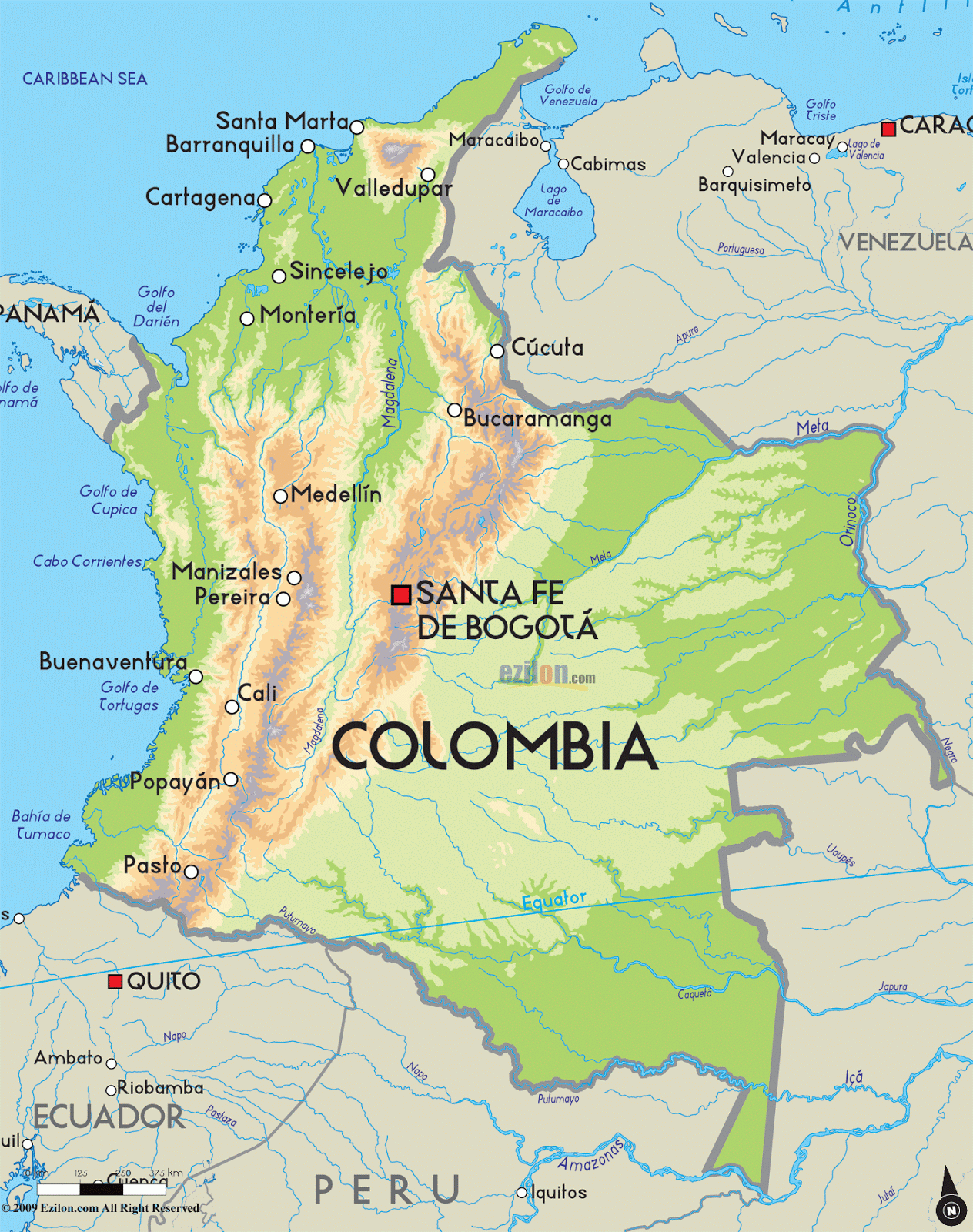
The mountains of the Sierra Nevada de Santa Marta in the north of Colombia are a major birding destination as it has the highest concentration of endemic bird species in South America! (From Birdwatching in Colombia by Jurgen Beckers and Pablo Florez). Because these mountains are widely separated from the Andes ranges, many species evolved into new species or subspecies. However, this isolation also means that biodiversity is a bit lower than the Andes ranges. So while you won't rack up a huge list here, you will see a lot of special / endangered / endemic species. 

Much of this mountain range is difficult to access and some parts not always safe. However, Cuchilla de San Lorenzo is a ridge that is very safe for birders, easy to get to, and all but one endemic is found here. Minca is a small town part way up that birders often spend a day or two at, followed by a few days higher up at the fantastic ProAves reserve and lodge called El Dorado. There is also a research station nearer the summit that's possible to stay at if you can make the arrangements. My brother and I also stayed a few nights at a small village called La Tagua after our plans to stay at the research station didn't pan out. 

I will do a separate post on the El Dorado Lodge and its hummingbird feeders, and another post on the endemics of this area. For now, here a few photos of some other birds we saw. 

Golden-bellied Grosbeak

Orange-chinned Parakeet


Swallow Tanager - very common along road here!


Yellow-bellied Chat-Tyrant

 Cinnamon Flycatcher


Black-fronted Wood-Quail (near endemic)

Bay-headed Tanager

 Blue-capped Tanager at feeder.

 Blue-naped Chlorophonia 


 Crested Oropendola

 Oropendola nests

 Me

 Matt

Sunset over the Caribbean as seen from the El Dorado Lodge

Monday, 10 March 2014

Cartagena - Colombia

This will be one of the more boring posts from my trip to Colombia. The first week was a family Christmas vacation (instead of buying gifts for each other that nobody needs or wants). We stayed at an all-inclusive resort since my younger brother and mom wanted some beach time and are not birders. And when I looked at flights, these week long package deals were often the same price or cheaper than just buying a return flight outright. 
Cartagena is one of the oldest (the oldest?) cities in South America and the old walled city is a Unesco World Heritage Site. I can't believe I didn't get pictures of the wall! It's a very beautiful and safe part of Cartagena.

My older brother Matt and I birded around the resort and it was actually quite productive since we were outside of the city. Surrounded by scrub we were able to get our first endemic - Chestnut-winged Chachalaca! Apart from some other scrub specialties, it was easy to tick off lots of shorebirds and herons along the coast and small wetlands nearby. A touristy boat ride to some nearby islands yielded a gorgeous dark phase Pomarine Jaeger, probably the most unexpected bird from this first week in Colombia. 

I didn't take my camera around much as I probably could have when we went birding so I didn't get many bird photos from this part of the trip. A bit regrettable, but better safe than sorry in touristy areas.

 Blue-winged Teal spending the winter in Colombia too.

 Green Kingfisher

 Little Blue Heron

 Pied Water-Tyrant

 Tricolored Heron

 Tropical Kingbird - one of the most common birds anywhere in the tropics

Wattled Jacana

My first injury on the trip also occurred at the resort via a spontaneously exploding glass shower door. It didn't slide easily when I was getting out of the shower and when I yanked it open it exploded and a shard of glass sliced open my thigh. Luckily it missed my important bits! 


Friday, 7 March 2014

COLOMBIA Birding 2014 - Introduction

I recently got back from 2 months birding/volunteering/vacation in beautiful Colombia. Why Colombia? Two reasons. Firstly, I like to travel and backpack around "exotic" countries where most people haven't visited before. While tourism is booming in Colombia, it's very easy to get off the tourist track and experience the real Colombia and see how average Colombians work and live.


Map borrowed from: http://www.ezilon.com/maps/south-america/columbia-road-maps.html

Secondly, Colombia is a birdwatchers heaven! Over 1900 species have been recorded in Colombia - the most of any country in the world.  Colombia also has scores of endemic species and near endemic species that it shares with only 1 or 2 other countries so there are all kinds of specialities to hunt for. 

My original plan was to blog while I was down there but I found proper internet lacking in most places I was staying at. Thus, I'm going to try and throw up some photos and information about my trip on here. I probably won't include too much text in future blog posts but feel free to message me for more information if you have any questions. 

Positioned at the top of South America, Colombia gets many North American migrants, including thousands of American Flamingos. I think these guys originate from some Caribbean islands. 

 Velvet-purple Coronet at Las Tangaras Reserve. Near endemic (also NW Ecuador) found on the western slope of the Andes. 

Emerald Toucanet (subspecies Lautus) at Santa Marta. Without going into the debate of "What is a species?", there are numerous subspecies in different regions of Colombia. The different subspecies often occur on different mountain ranges, or in different valleys. Many species are undergoing splits and being upgraded to full species status all the time so it pays to try and see the different subspecies while you are in different areas. Using ebird to enter my sightings helps me keep track of some splits, although sometimes it doesn't recognize splits that others recognize.

 Feeders are a great place to snag some photos and study the birds with ease. Blue-naped Chlorophonia and Blue-caped Tanager at the El Dorado Lodge in the mountains above Santa Marta.

Itinerary:

January 2nd-9th - Family Christmas vacation with my mom and two brothers around Cartagena on the Caribbean coast. Opportunistic birding, not too intense. 

January 9th-19th- Birding Sierra Nevada de Santa Marta area (big endemic area), birding Guajira (desert region in the north)

January 20th-February 10th - Volunteering at ProAves Reserve Las Tangaras in the Choco region (very wet pacific slope of western Andes). 

February 11th - February 19th -Volunteering at a ProAves Reserve that conserves the Yellow-eared Parrot at Jardin.

February 20th - 27th - Birding at two other ProAves reserves before flying home.


Santa Marta Parakeet - Endemic and endangered species found only in the Sierra Nevada de Santa Marta of Northern Colombia. 

View from the road within Las Tangaras reserve. 
Up above the treeline in the "Paramo", a scrubby, grassy ecosystem where several new bird species have been recently discovered.

Friday, 29 November 2013

Yellow-headed Blackbirds at Long Point

I'm back to blogging, wow has it been a while. Once you take a break, sometimes it's hard to get back into it. Plus you have to find something worth blogging about - and that day was today!

I'll make this short and sweet. Heading west of Long Point looking for Mike Burrell's previously e-birded Greater White-fronted Geese I ran into a flock of blackbirds feeding along Gore Rd. There were a lot of Rustys so I thought I'd try and pick out a Brewer's. I ended up e-birding ~800 RUBL, so maybe that's why I didn't see a Brewers.

Anyways, at the corner of Gore and Concession A I looked up into a tree and was shocked to see a gorgeous male Yellow-headed Blackbird. I quickly texted some local birders, and looked back up to see another YHBL a short distance away! I couldn't believe my luck.

Here's a phone-scoped shot of the female/immature male. Feel free to make comments on the sex.

If you go to look for these YHBLs it might take a while. Even with 5 people looking it can be tough to pick them out if obscured by corn stubble, tree branches, and raptors keep putting them up.

Saturday, 13 July 2013

2013 Long Point Butterfly Count

On a mostly sunny and warm July 6th the Norfolk Field Naturalists held the 22nd Long Point Butterfly Count.

Most groups commented on the relatively low numbers of butterflies but we did manage to come up with a respectable 2186 individuals of 49 species (average of 2572 and 49 respectively since 1992). The species total doesn't include the single larvae of Giant Swallowtail or the White Admiral form that is considered the same species as Red-spotted Purple. The North American Butterfly Association simply uses the common name Red-Spotted Admiral to refer to both subspecies.

Highlights and Lowlights:

New for the count: 3 American Snout, bringing us to 77 species all time
1004 Edward's Hairstreaks is a new count high (previous was 73)
2 Gray Comma passes previous record of 1
12 Crossline Skippers ties the previous high
2 Striped Hairstreaks are the first since 2007
4 Monarch beats previous record low of 5 set in 2002 (average of 51 since 1992)
1 Question Mark ties record low
4 Monarch beats previous record low of 5 set in 2002 (average of 51 since 1992)
1 Question Mark ties record low

The full list is below. 

July 6th, 2013 Long Point Butterfly Count
English Name Number
Black Swallowtail 1
Eastern Tiger Swallowtail 44
Canadian Tiger Swallowtail
Spicebush Swallowtail 13
Pipevine Swallowtail
Checkered White
Mustard White
Cabbage White 261
Clouded Sulphur 35
Orange Sulphur 8
Harvester
American Copper 11
Bronze Copper 3
Coral Hairstreak 11
Acadian Hairstreak
Edward's Hairstreak 1004
Banded Hairstreak 2
Hickory Hairstreak 1
Striped Hairstreak 2
Gray Hairstreak
Eastern Tailed-Blue 7
Summer Azure 37
American Snout 3
Variegated Fritillary
Great Spangled Fritillary 18
Silver-bordered Fritillary
Meadow Fritillary
Aphrodite Fritillary
Silvery Checkerspot 19
Pearl Crescent 8
Northern Crescent 333
Baltimore Checkerspot 40
Question Mark 1
Eastern Comma 6
Grey Comma 2
Compton Tortoiseshell
Mourning Cloak 14
Milbert's Tortoiseshell
American Lady
Painted Lady 1
Red Admiral 8
Buckeye
Red-spotted Purple 16
Viceroy 6
Tawny Emperor 17
Northern Pearly-Eye 6
Eyed Brown 24
Appalacian Brown 1
Little Wood-Satyr 30
Common Ringlet
Common Wood-Nymph 40
Monarch 4
Silver-spotted Skipper 78
Southern Cloudywing
Northern Cloudywing 2
Dreamy Duskywing
Sleepy Duskywing
Juvenal's Duskywing
Wild Indigo Duskywing
Common Sootywing
Least Skipper 3
European Skipper 18
Peck's Skipper 2
Tawny-edged Skipper 1
Crossline Skipper 12
Long Dash 3
Northern Broken-Dash 11
Little Glassywing
Sachem
Delaware Skipper 1
Hobomok Skipper 2
Broad-winged Skipper 1
Dion Skipper
Black Dash
Two-spotted Skipper
Dun Skipper 15
Common Checkered Skipper
Total Individuals 2186
Total Species 49

Saturday, 15 June 2013

Piping Plover and RUTU leg flag


On June 4th I was doing a boat trip on the south shore of Long Point. When doing such trips I’m always on the lookout for shorebirds and there’s always something to be spotted. On this day I was very lucky to spot an unbanded Piping Plover feeding along the water’s edge. Had it been further up on the beach I almost certainly would not have spotted it. This species had been a nemesis bird of mine having never seen one before in Ontario. I have never bothered to twitch any of the breeders in other parts of the province and seem to miss them each year by some stroke of bad luck.
Ghostly colouration makes them hard to spot on the beach - particularly from a moving boat!


A note on some cool band recoveries: In late May I had a Ruddy Turnstone that was carrying a leg-flag on one leg and a geolocator on the other. I was able to read the leg flag and it turned out the bird was banded in Brazil back in February of this year! Then I saw a Caspian Tern with a white band and I could read the 3 letter code of that band as well. Turned out it was banded in Hamilton Harbour back in 2009 as a hatchling. We even had a racing pigeon turn up out here this spring and it turned out he was from the GTA. I wish there were more legbands/flags out there to look for as it’s really fun spotted them and getting feedback on the birds. It reminds me of when I was a youngster and we used to spot neck bands on Tundra Swans around Long Point.

 A photo of Charles the racing pigeon, or at least that's what we called him.

Nothing of note on the butterfly front...yet. Odes are increasing and I've seen 4 Painted Skimmer's so far but am hoping for something better...

Monday, 20 May 2013

Spring at the tip of Long Point

Haven't blogged in a while so I thought I'd provide a bit of an update. I've been living at the tip of Long Point more or less for much of late April and May doing some amphibian and reptile surveys for Bird Studies Canada. It's been an awesome experience so far and I get to see lots of cool birds too - both the free flying kinds and the ones that the bird banders are catching as well. Check out the Bird Studies Canada board to see highlights from week to week:
http://www.bsc-eoc.org/longpoint/index.jsp?targetpg=lpbosight&lang=EN

I'd love to blog more about the whole experience but with no internet out there, almost no cell service, and a pretty full day herping, birding, and keeping up with daily chores, blogging takes a backseat. It's also nice to kind of "un-plug" while out there with no T.V. and not being glued to a computer (except for some data entry). 

So far I've managed to add two long overdue birds to my Ontario bird list - Chuck-Wills-Widow and Laughing Gull. I was hoping to add some bigger rarities but have had some terrible luck. Twice I've left the tip only for a rare bird to turn up the following morning! Missing out on the Swainson's Warbler and Bewick's Wren hurt bad. It still stings... Keeping up with tradition, a Loggerhead Shrike turned up yesterday after I had already left the tip that morning! 

Here are some random phone-photos:

 Eastern Gartersnake eating a Chorus Frog.

 A late Evening Grosbeak

 Me checking some beautiful inland wetlands on the point.

 Not everyday you see Cerulean Warbler and Yellow-throated Warbler in the hand side-by-side.

 Woke-up to this photo text - damn Swainson's Warbler! 

 These two photos were taken from the exact same location - looking south to the dunes and north to what you'd think was somewhere in northern Ontario. 

Baby Woodcock!