Showing posts with label Common Whitetail. Show all posts

Saturday, 2 June 2012

Pronghorn Clubtail and Painted Skimmer

Today I was a leader for a BioBlitz happening at the St.Williams Forestry Tract in Norfolk County. From the advertisement: "A BioBlitz is an intense period of biological inventorying in an attempt to record all the living species within a designated area." My job was to lead a group of people (turned out to be me +1)with a focus on reptiles and amphibians, while other leaders looked for other things. I pretty much just recorded everything I saw.

As far as reptiles and amphibians went, we didn't find anything terribly exciting - just the common stuff.

Butterflies - 15 species, nothing unusual.

Birds - Pretty much just the expected species, but a highlight for me was my first "orange variant" Scarlet Tanager. Scarlet Tanagers are usually scarlet red with black wings but occasionally an individual will turn up that is orange in colour.

Dragonflies - 10 species, with several highlights for me.

Highlight 1) My first Painted Skimmer. I saw a large dragonfly flying over the open field at St.Williams that had very yellowish wings, that appeared to have markings on them. This darn thing wouldn't land and with it darting all over the place it was hard to get a great look. Never-the-less I'm fairly confident it was a Painted Skimmer due to it's size, behaviour, and wing colouration.

Highlight 2) A Pronghorn Clubtail (photo below) was an unexpected surprise when it landed just in front of us allowing a few photos. A dry open field is not exactly where you expect to see Clubtails, but it happens!


Highlight 3) While watching a Snowberry Clearwing moth visit some flowers a large dragonfly whipped in and grabbed some large prey item. We feared the clearwing ended up as dinner, but it wasn't the case. A Common Green Darner had caught and proceeded to eat a Common Whitetail, a fairly good size meal. Dragonflies truly are voracious predators.


 An Aurora Damsel was also nice to find. This species is identifiable by the lack of postocular spots on the eyes (no blue markings on eyes), and blue over yellow on the thorax. Another clue is that it rests with its wings partly open similiar to a spreadwing.


Wednesday, 16 May 2012

Duskywing sp., and a Hog-nosed Snake

This post is kind of a catch all for the past few days. First I'll start with a Duskywing I photographed in dry oak habitat at St. Williams. Several people were out yesterday and came up empty when it came to finding Sleepy Duskywing - an early flying butterfly. It was suggested by Bob Curry that perhaps due to the warm spring their flight period was already over. There were lots of Juvenal's Duskywings flying about but I managed to pick out either a Dreamy Duskywing or a Sleepy Duskywing. Based on habitat I'd lean towards Sleepy, but I don't have a lot of experience with these guys, so if anyone can look at the photos and give me a definitive answer I'd be very grateful!


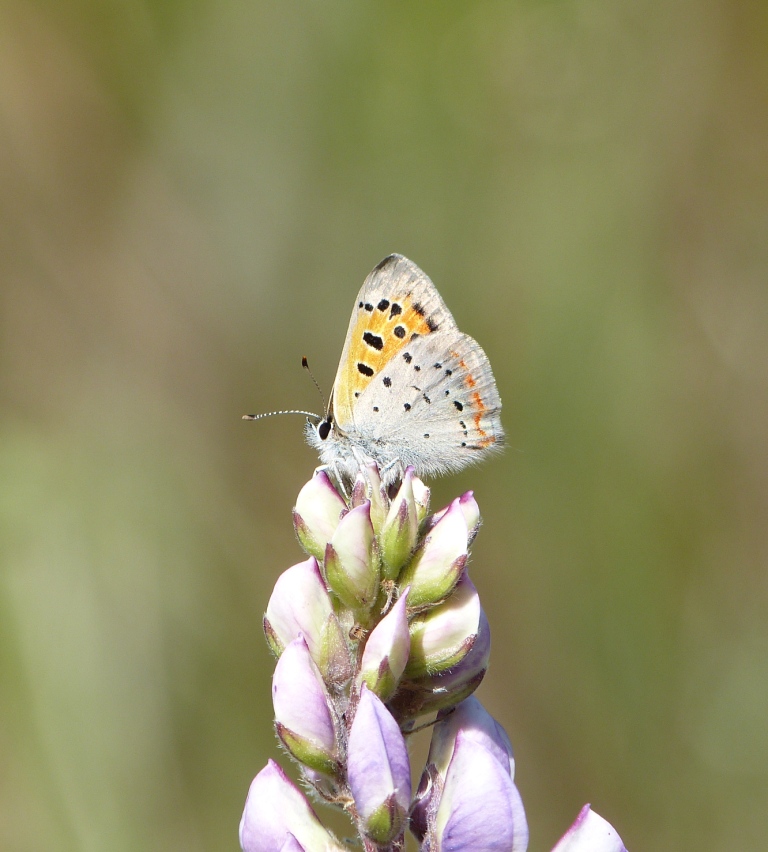
Also present were many American Coppers, and the Lupine was in full bloom.
 

Down the road from St. Williams I photographed this female Common Whitetail.

 As well as this male Beaverpond Baskettail.


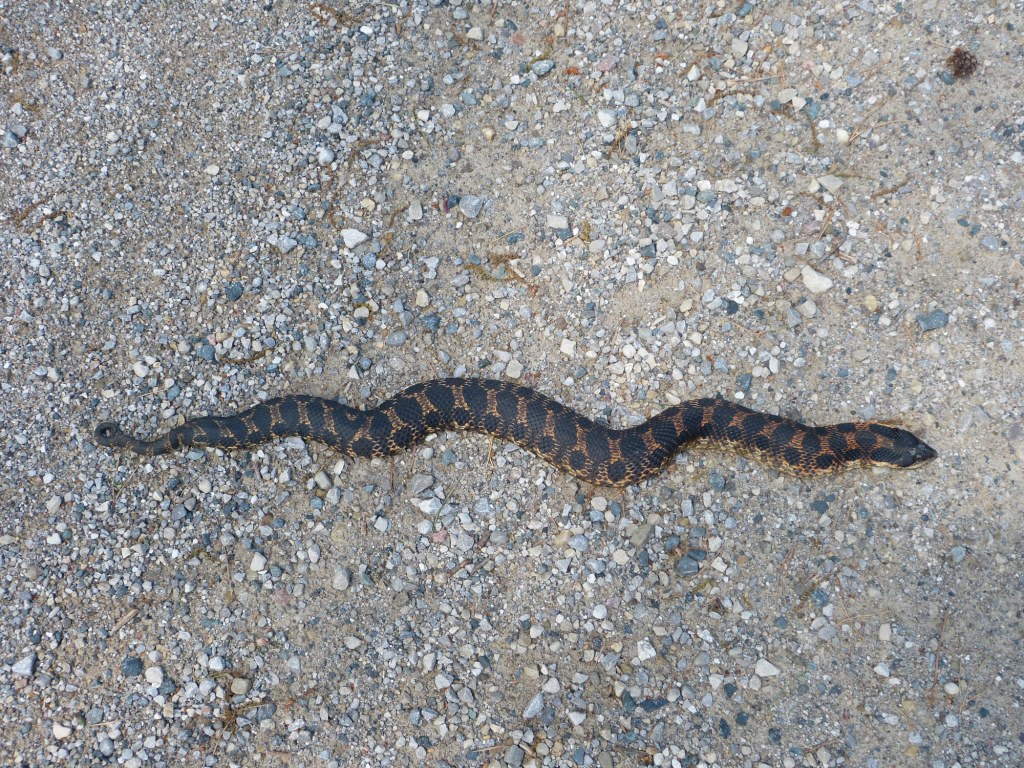
Today while walking my dog I came across this monster of a Hog-nosed Snake basking on the side of the road. I moved it off the road so hopefully it doesn't get squashed.


Not only did it flare its neck and hiss when I approached it, it also tilted its neck towards me in order to make itself look as large as possible. It also lifted it's head and neck quite high off the ground - very cobra like! They are of course harmless and not poisonous to humans.